A practice site that had to be accurate before it could be pretty
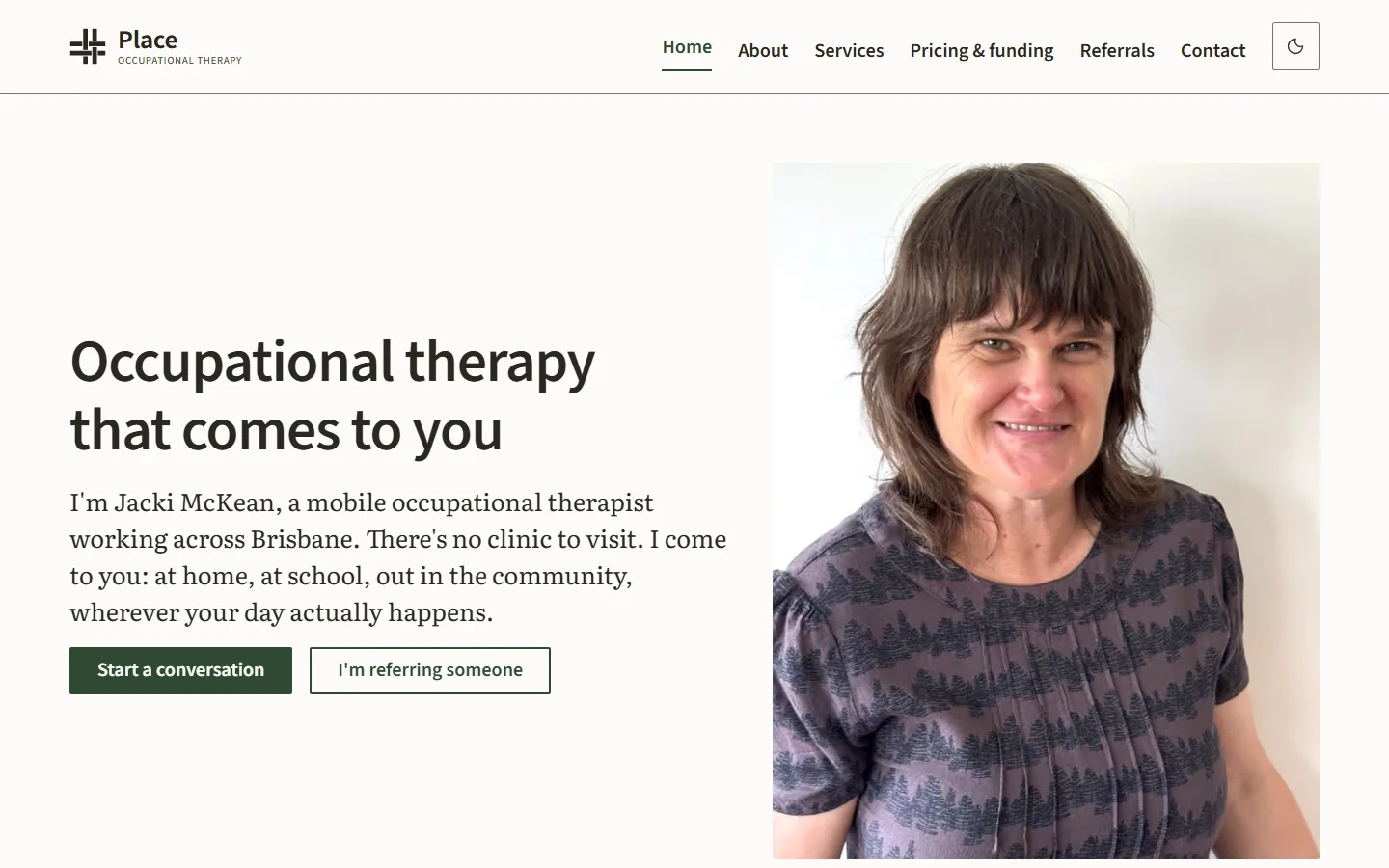
A Brisbane mobile occupational therapist needed a small site that families and referrers could trust, with NDIS, Medicare and AHPRA constraints treated as design rules, not footnotes.
The problem
Jacki McKean is building a solo mobile occupational therapy practice in Brisbane. The site had one job: be findable, explain the work and the funding plainly, and convert a family or a referrer into a fit conversation. In allied health, a wrong published rate, a sloppy claim, or a leaked home address is not a copy issue. It is a professional risk.
The approach
We started with primary-source research: NDIS line items, Medicare rebates and caps, AHPRA and privacy constraints, and how a referral should actually be taken. The build is a small static site. The discipline is in what is allowed to appear. Rates, service area, response times and banned claims are data, checked at build time. The public site never publishes a residential address.
What we built
- A focused practice website for families and clinical referrers
- Published figures and policies held as structured data, not pasted into page copy
- Build-time checks so a banned claim or a private address cannot ship
- An enquiry path that goes to a short fit call, not a self-service booking into a clinical diary
- A handover model where Jacki owns the accounts, and State Zero can be removed without a migration
Outcome
The site is in preview and moving toward launch on her own domain. This is the shape of engagement we most want more of: a founder-operator, a clear job for the website, and enough compliance work that “just put it on a template” would have been the wrong answer.
A specialist broker site, with a briefing room he can keep writing
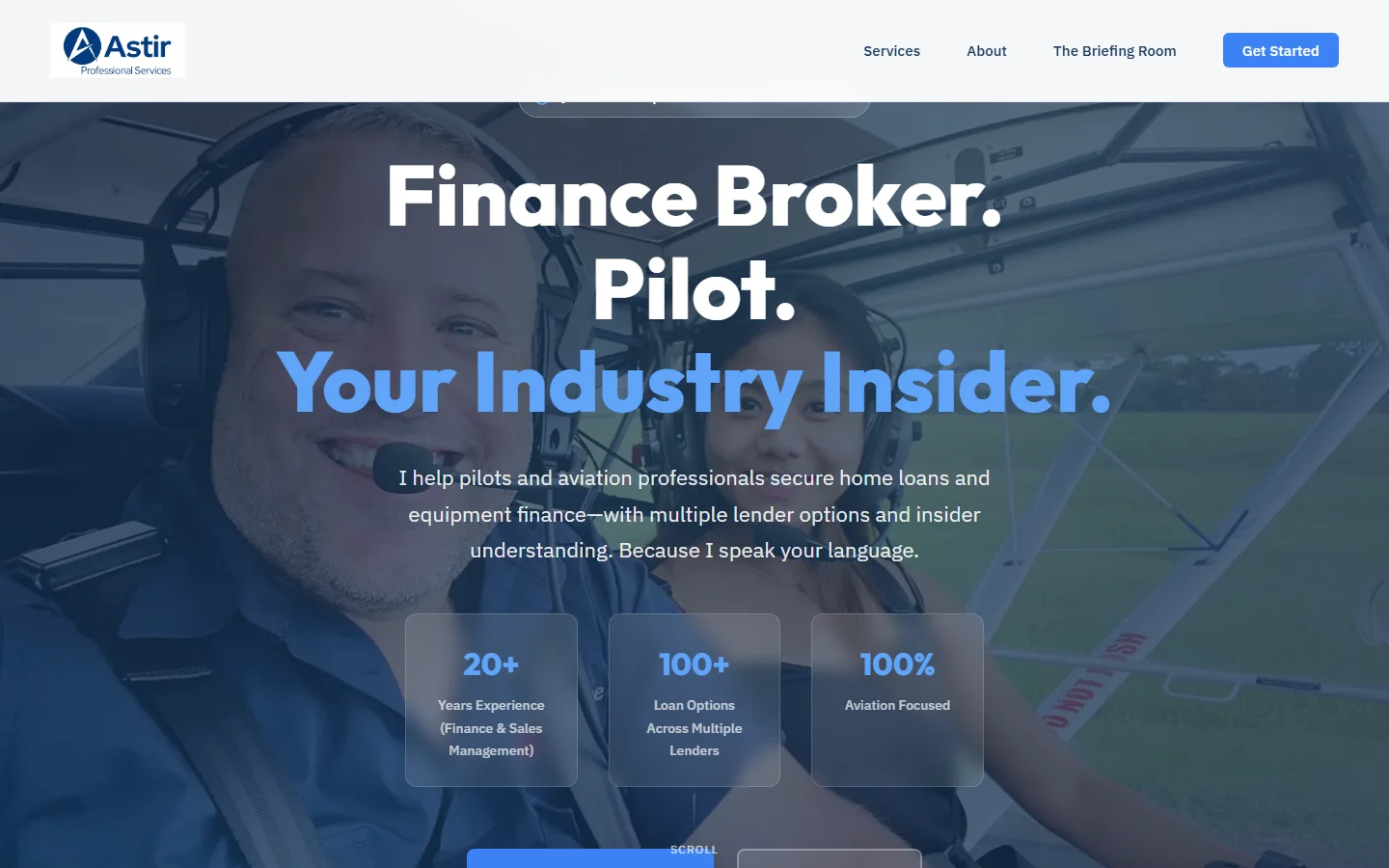
A Queensland aviation finance broker needed a site that spoke to pilots in their own language, and a place to publish market notes without calling a developer.
A relaunch that started producing enquiries, with quoting behind it
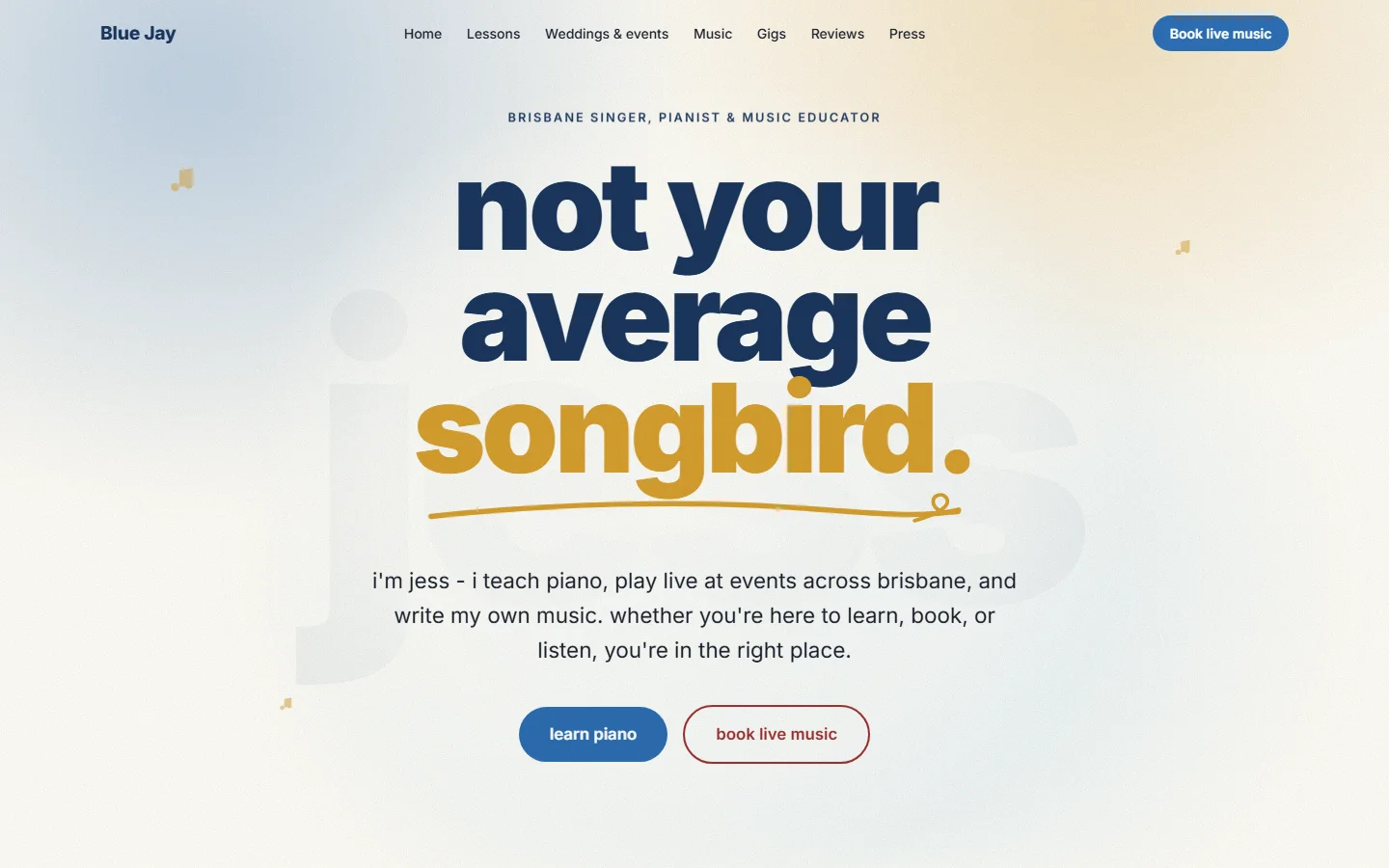
A Brisbane musician needed to replace a GoDaddy site that was not winning work, and a way to turn an enquiry into a quote and a deposit without email tennis.